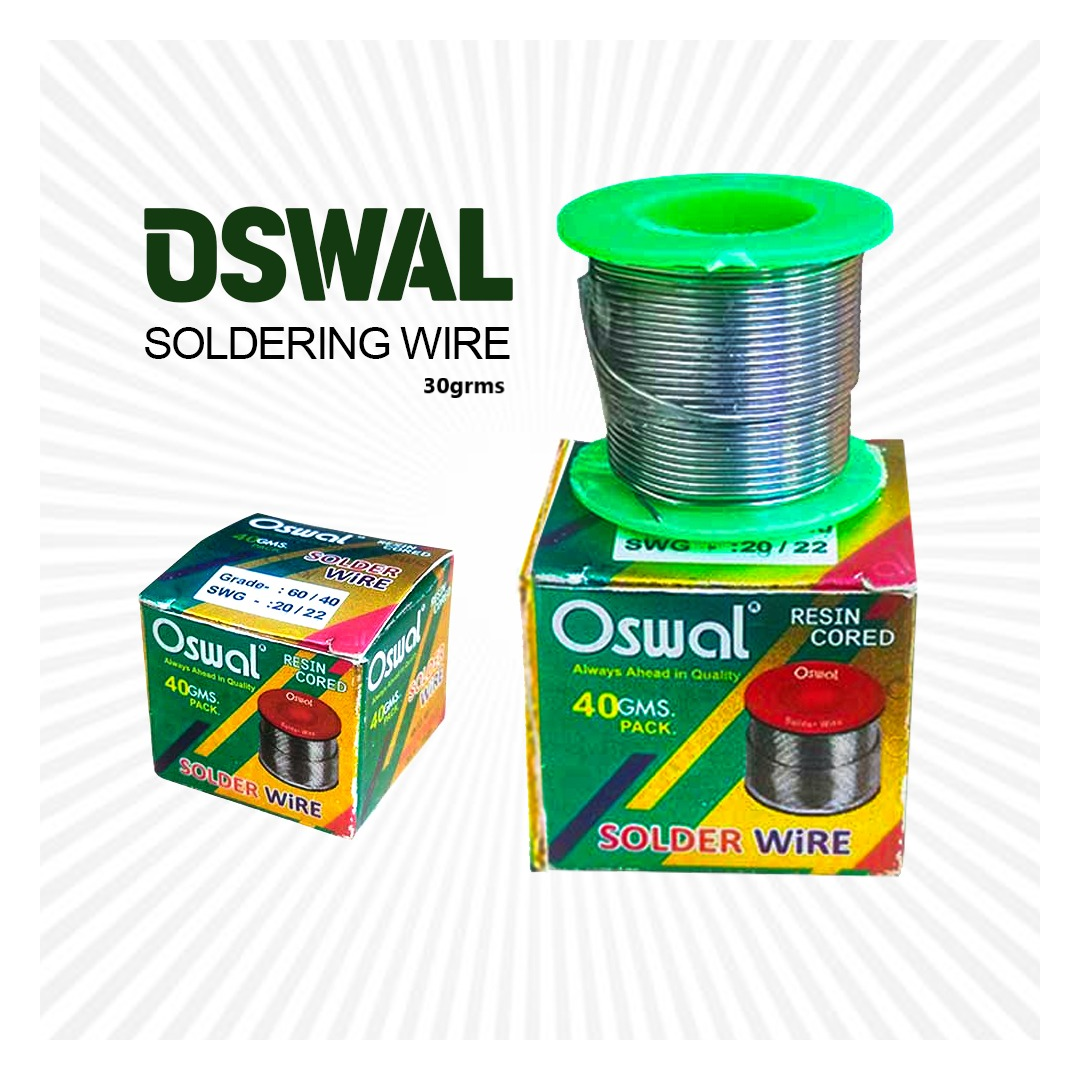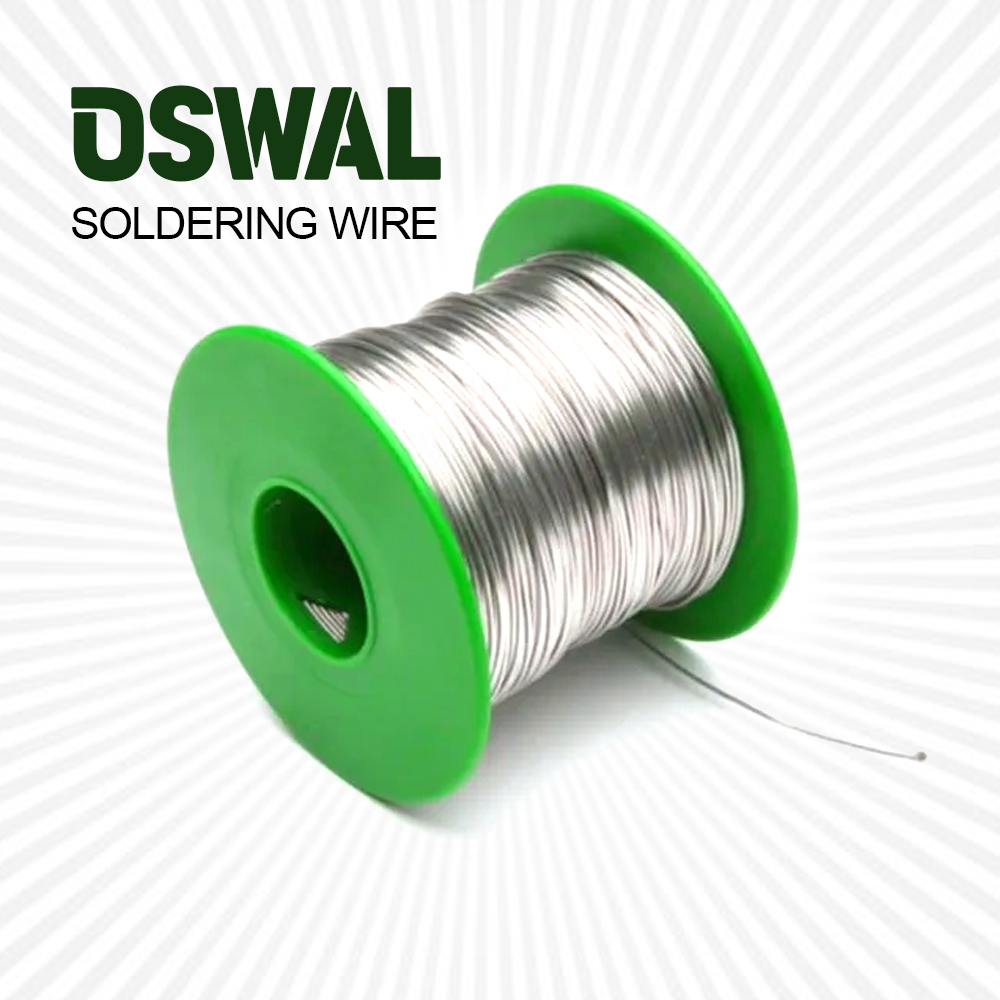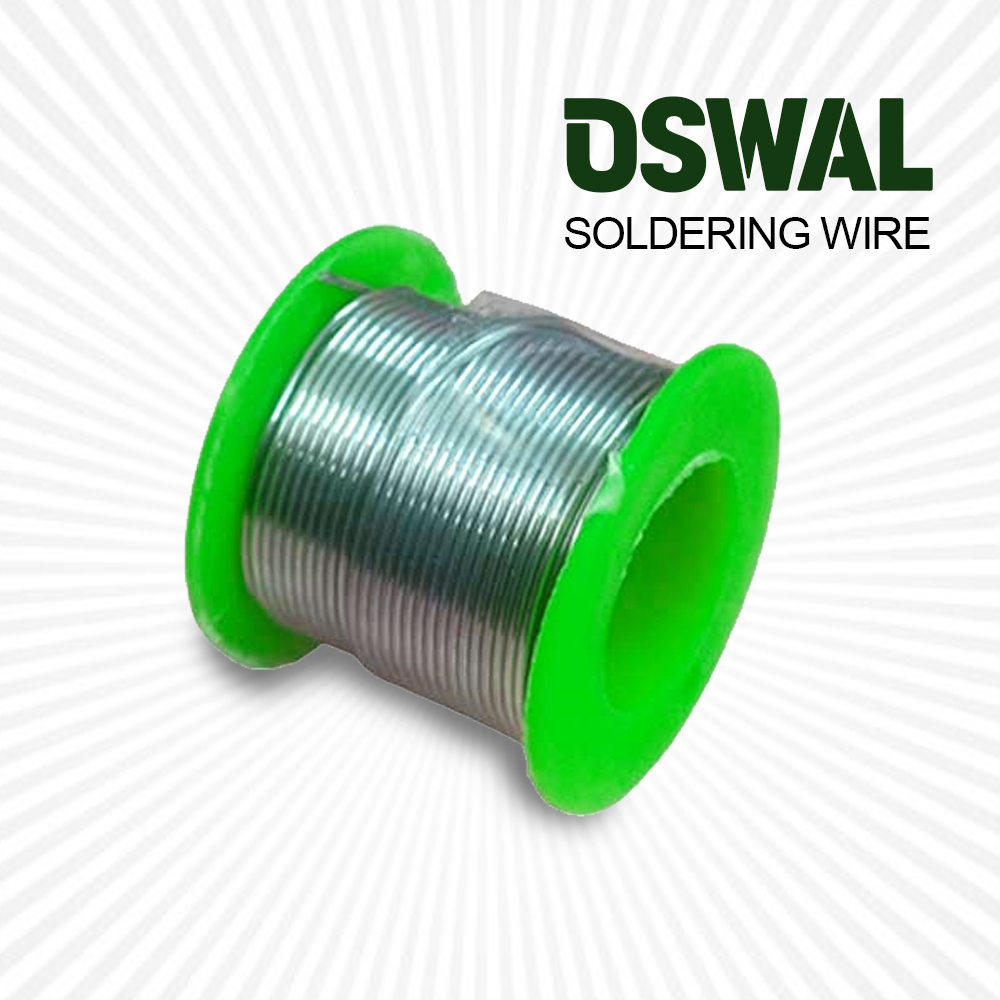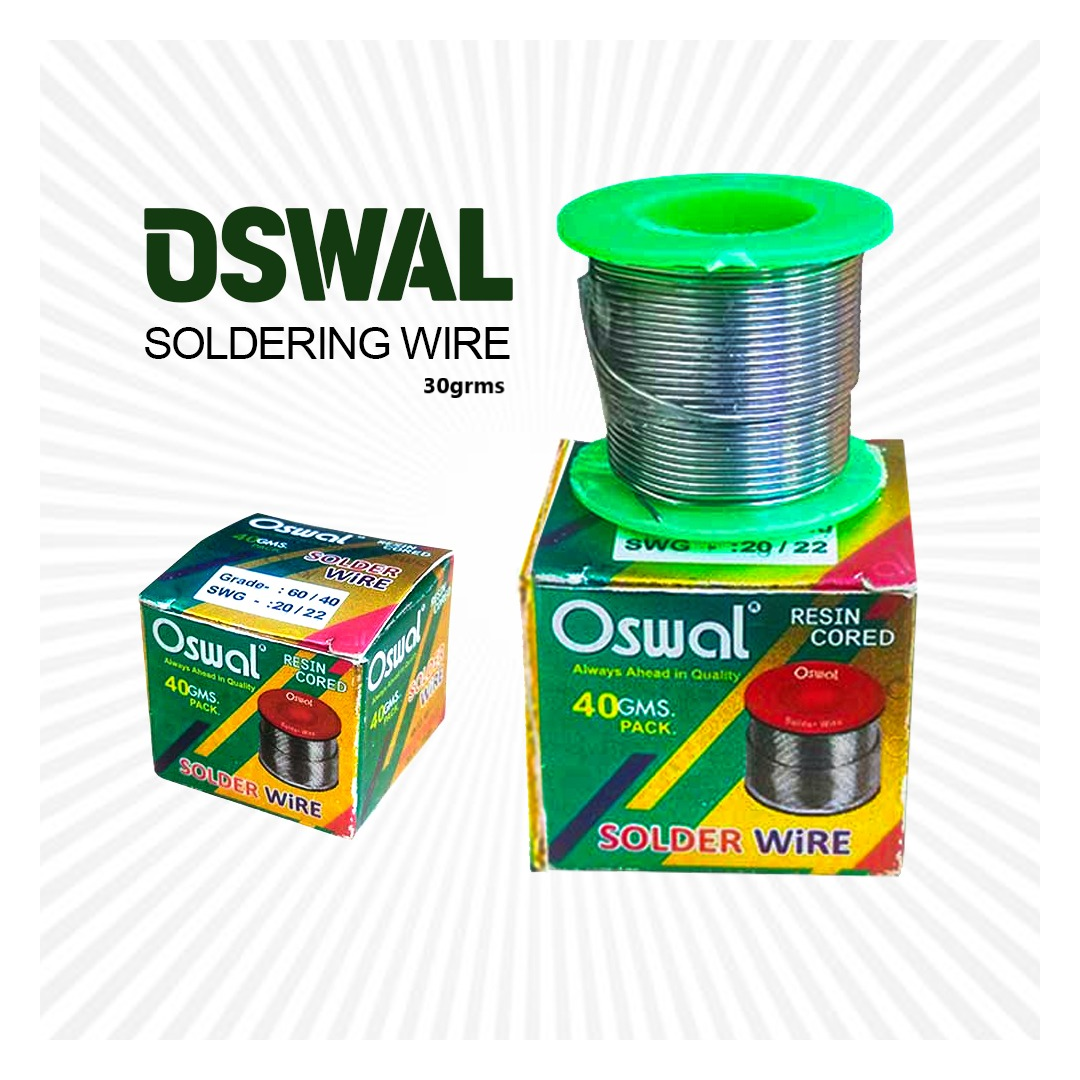
Oswal Soldering Wire
* OSWAL Active Medium Temperature Solder Wire
* All Product Ingredients Are Rigorously Tested And All Data Is True And Valid.
* Select High-quality Raw Materials, Tin Colour Is Bright, And Solder Joints Are Full.
* Full Name Net Weight, No False.
* Including Soldering Rosin For A Better Soldering Effect.
* Medium Temperature Melting Point, Widely Used For Maintenance Work Such As Mobile Phone Repair.
* No Cleaning
1
Below is a detailed breakdown of the Oswal Solder Wire, designed for high-precision electronic repairs and industrial applications.
| Feature | Technical Details & Specifications |
| Brand | Oswal |
| Product Type | High-Grade Solder Wire |
| Alloy Composition | Typically 60/40 (Tin/Lead) or Lead-Free (Sn-Cu) variants |
| Wire Diameter | Available in multiple gauges (e.g., 20 SWG, 22 SWG) |
| Flux Content | Integrated High-Quality Resin (Rosin) Core |
| Melting Point | $183°C$ to $190°C$ (Standard 60/40 Alloy) |
| Spool Weight | Available in 10g, 50g, 100g, and 250g options |
| Surface Finish | Bright, smooth, and oxidation-resistant joints |
| Application Scope | PCB repair, micro-soldering, mobile hardware, and DIY electronics |
Low Melting Point: Engineered for rapid melting, ensuring that sensitive electronic components (like ICs and SMDs) are not exposed to excessive heat for prolonged periods.
Integrated Flux Core: The high-quality rosin core eliminates the need for extra flux in most standard joints, promoting better wetting and a cleaner flow.
Minimal Residue: Post-soldering residue is non-corrosive and non-conductive, which is critical for maintaining the longevity of smartphone motherboards and precision circuits.
High Conductivity: The alloy blend is optimized for low electrical resistance, ensuring stable signal transmission in repaired devices.
Reliable Consistency: The wire is manufactured to maintain a uniform diameter throughout the spool, preventing "spitting" or uneven beads during professional use.
Preparation: Ensure the soldering iron tip is clean and tinned.
Temperature Setting: For 60/40 Oswal wire, a station temperature between 300°C and 350°C is generally ideal for efficient flow without scorching the board.
Application: Heat the component pad and the lead simultaneously, then apply the Oswal wire to the joint rather than the iron tip itself.
Storage: Keep the spool in a dry environment to prevent oxidation of the outer wire layer.
Note: When working on modern smartphone motherboards or high-density PCBs, using the 22 SWG (thinner) variant is recommended for better control during micro-soldering tasks.