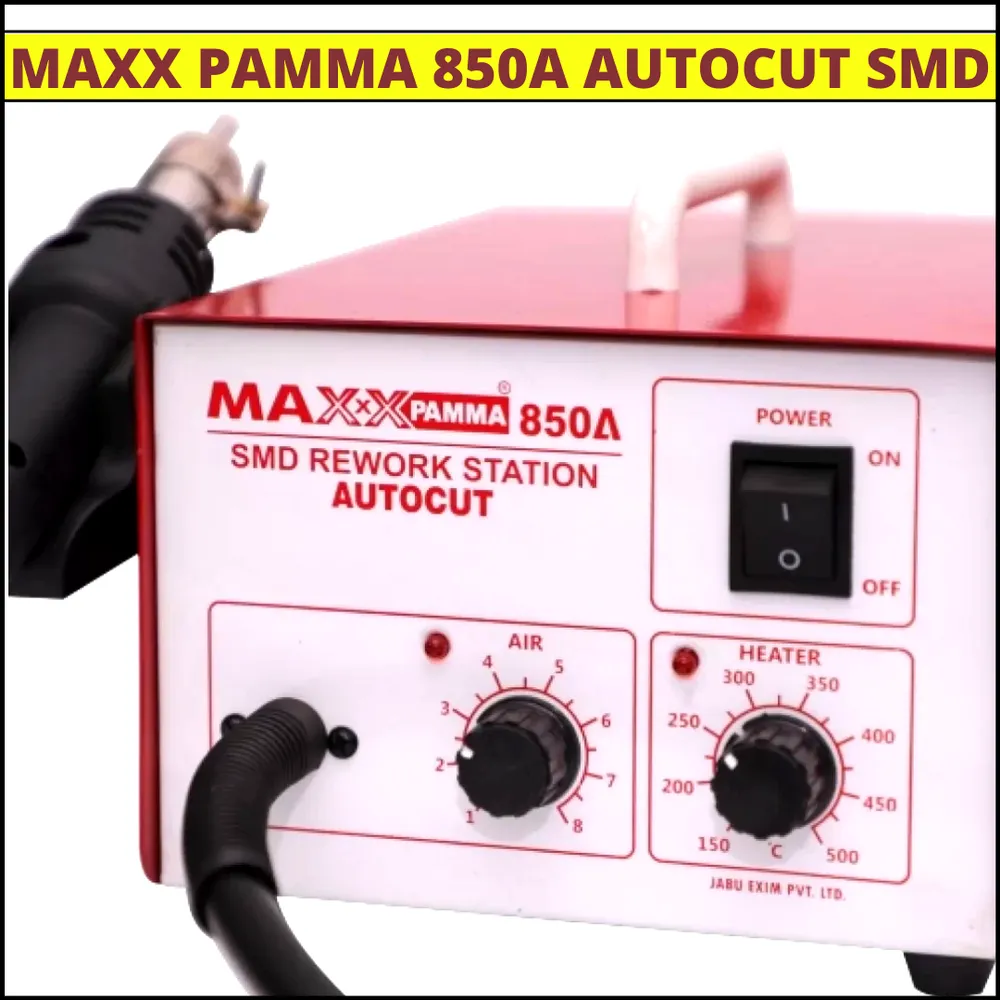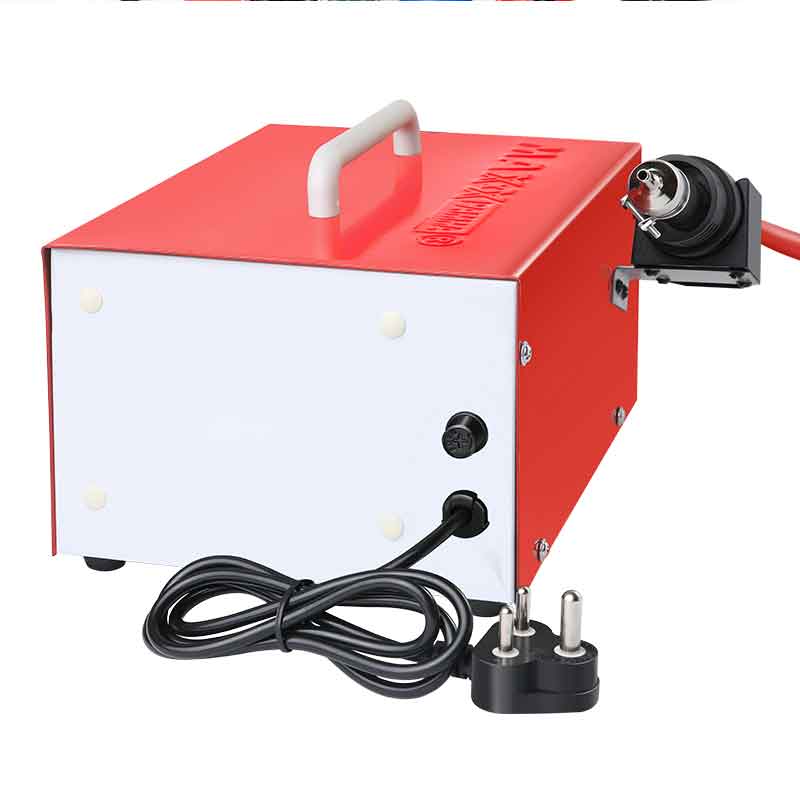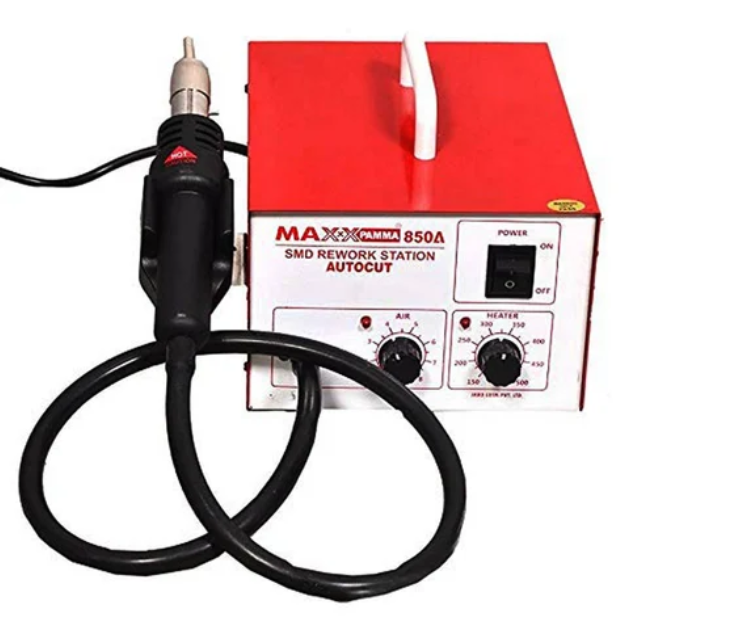
Maxx Pamma 850a Autocut Smd
* Power: 220V , 270W,
* Temperature: 200-450°C.
* Heating Element Porcelain Heating Element.
* Heat time of 20 seconds
* Maxx Pamma DC Power Supply
* Rework Station Heating element: porcelain heating element.
1
The Maxx Pamma 850A Autocut SMD Rework Station is a staple entry-level tool for electronics repair technicians, particularly those specializing in mobile phones, laptops, and PCB soldering. It is known for its balance of affordability and the "Autocut" safety feature, which preserves the life of the heating element.
Below is the full product description organized by specifications, features, and package contents.
| Feature | Details |
| Model Number | Maxx Pamma 850A (Autocut Version) |
| Input Voltage | 220V - 240V AC / 50Hz |
| Power Consumption | ~270W - 320W |
| Airflow Type | Diaphragm Pump (Compressor Type) |
| Airflow Volume | 0.3 to 24 Liters per minute (L/min) |
| Temperature Range | 100°C to 450°C |
| Heating Element | High-quality Metal Core / Ceramic |
| Pump Noise Level | ? 45dB |
| Dimensions | ~190 x 135 x 245 mm |
| Weight | Approx. 3.5kg - 4kg |
The 850A is a classic "hot air" station. Here is a breakdown of why it remains a popular choice for workshops:
Autocut Function: This is the standout feature. When the handle is placed back onto the dedicated stand, the machine automatically cuts power to the heater and continues blowing air until the nozzle cools down. This prevents the heating element from burning out prematurely.
Analog Precision: It utilizes dual analog knobs for independent control over Air Flow and Temperature. While not digital, the analog dials are robust and offer tactile feedback.
Diaphragm Pump: Unlike "fan-in-handle" models, the 850A uses an internal pump. This provides a focused, high-pressure air stream ideal for desoldering sensitive SMD components without blowing surrounding parts off the board.
ESD Safe Design: The station is built with Electro-Static Discharge (ESD) safety in mind, ensuring that sensitive micro-components are not damaged by static during the rework process.